

Inside the Poppi Castle, the Chapel represents one of the most intimate and private spaces of the complex
/chapel/
The Chapel of Poppi Castle, which houses the fresco cycle attributed to Taddeo Gaddi, demonstrates how the Conti Guidi were, among other things, notable art lovers, in close contact with the most significant circles of Florence and Tuscany of the period.
In contrast to the state rooms and spaces associated with power and public life, this place preserves a more private dimension, linked to spirituality and reflection.
The Chapel is not only a religious space, but a space that speaks to the human need for silence and interiority, even within a medieval fortress.
The chapel features a simple aesthetic, typical of the 14th century, where geometry meets the solidity of stone. The space, with an irregular quadrilateral plan, is covered by a cross vault supported by ribs resting on four 14th-century-style stone corbels.
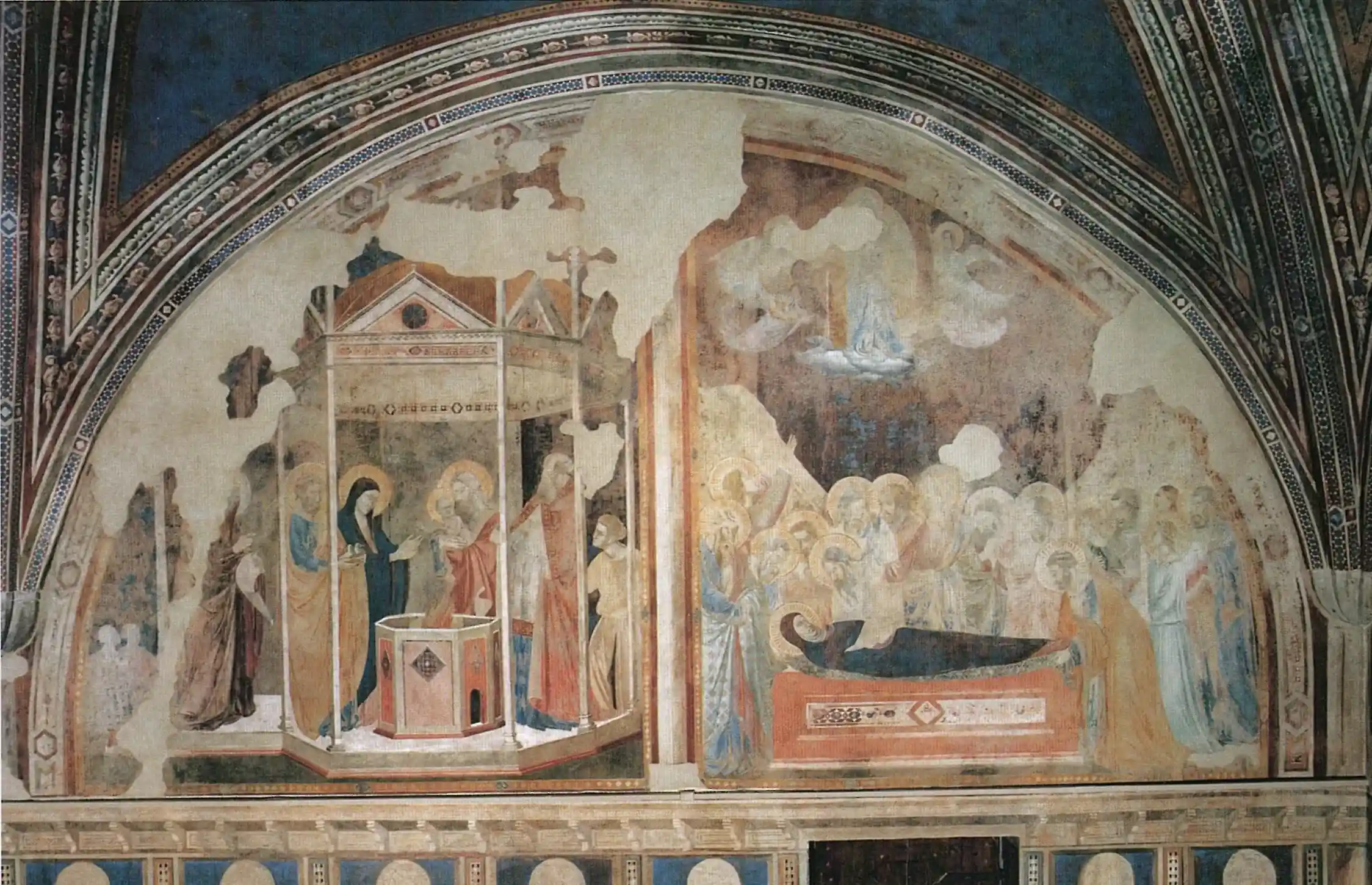
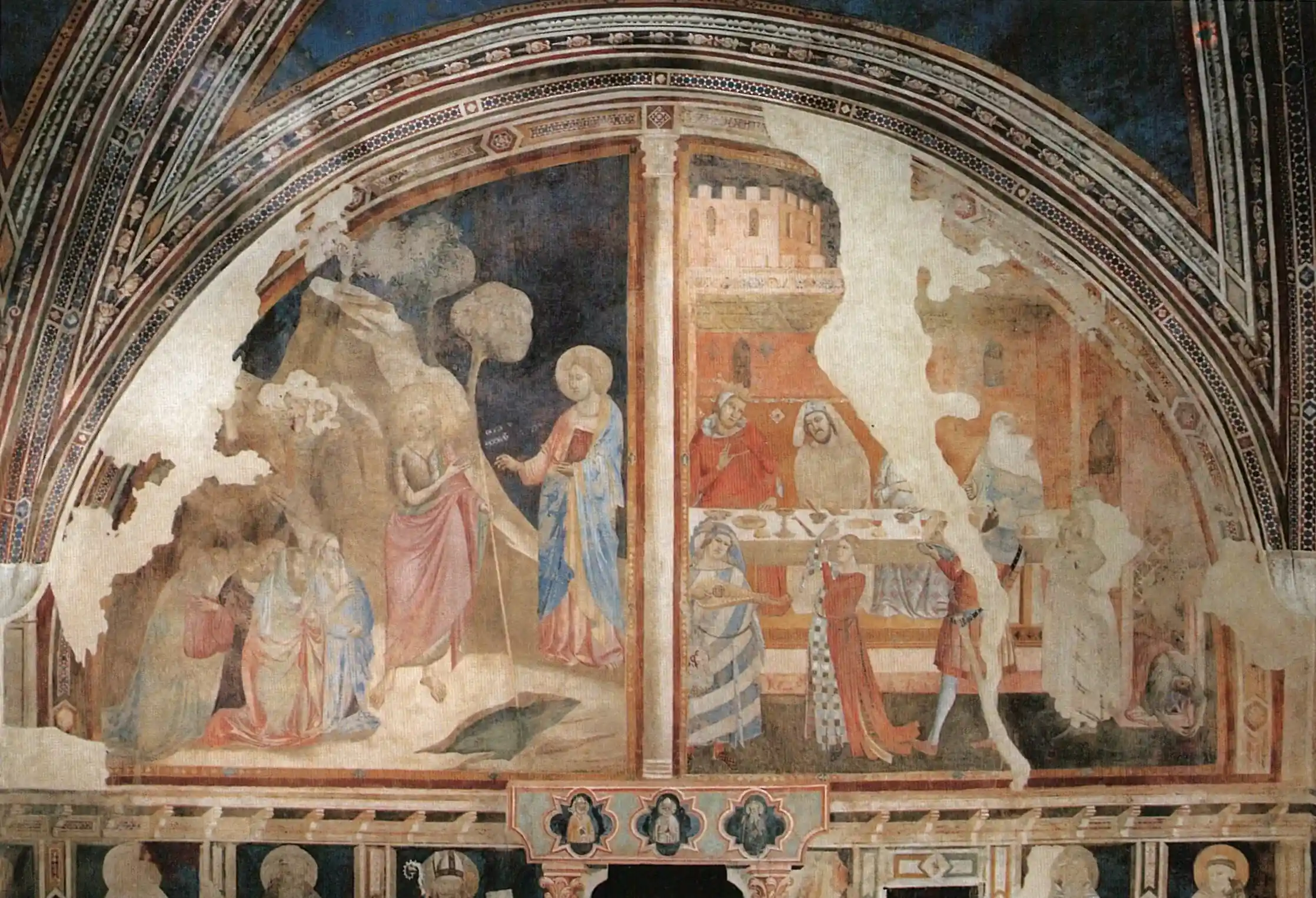
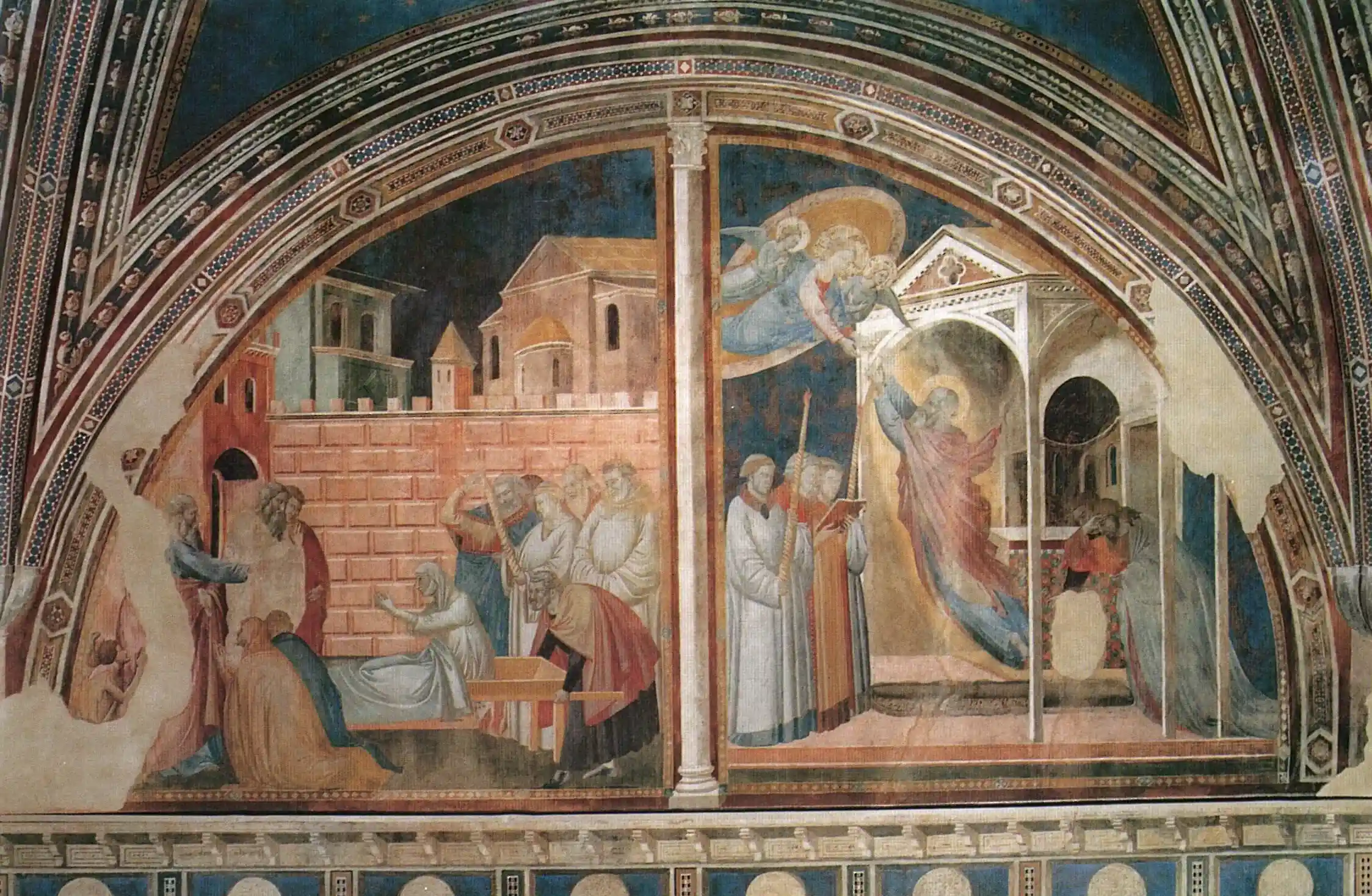
The artistic heart of the chapel is entrusted to Taddeo Gaddi, Giotto’s closest pupil. The frescoes, dating back to the third decade of the 14th century (as confirmed by Vasari), are displayed in the three lunettes beneath the vault. Each lunette is divided into two scenes, for a total of six narrative frescoes:

Above the entrance are depicted the Presentation of the Baby Jesus at the Temple on the left, and the Dormitio Virginis on the right.
Main theme _ Life of the Virgin
Left scene _ Presentation of Jesus in the Temple
Scene Right _ Dormitio Virginis

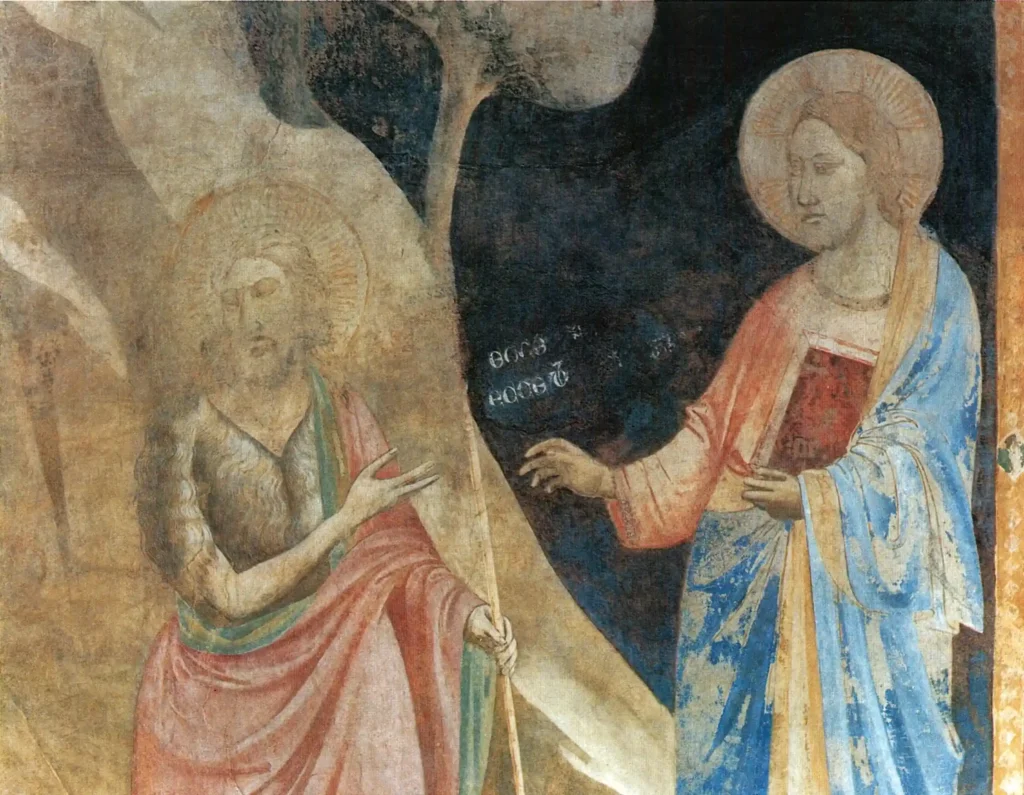
Left wall as you enter the chapel: Stories from the Life of St. John the Baptist. Left scene: The Meeting of Jesus and John the Baptist in the Desert: at the feet of the main figures kneel various figures, who tradition holds are members of the Guidi family. The right scene depicts Herod's Supper.
Main Theme _ Stories of John the Battista
Left Scene _ The Meeting between Jesus and Saint John (with portraits of the Guidi dinasty)
Right Scene _ Herod’s Banquet

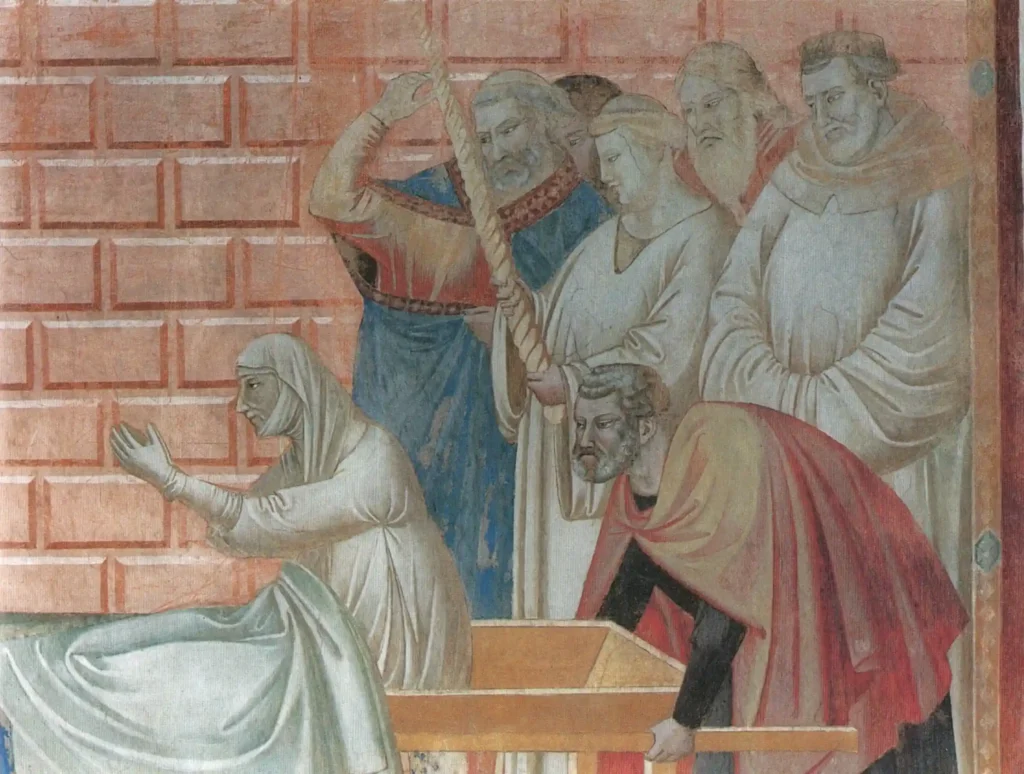
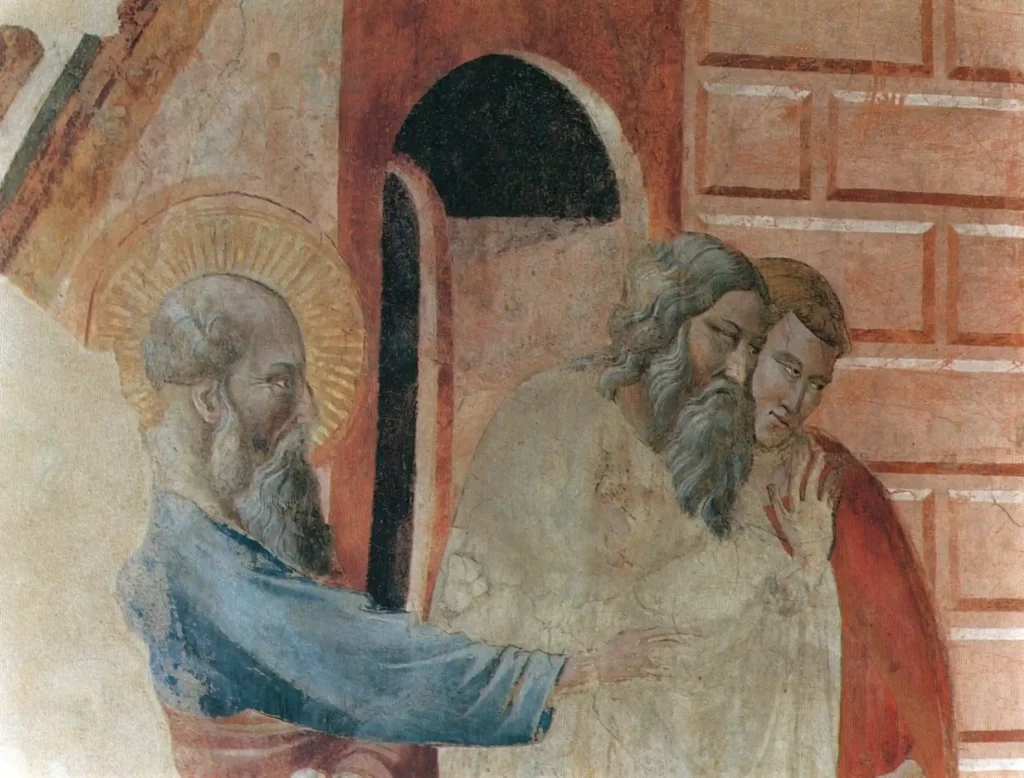
Right wall as you enter the chapel: Scenes from the life of St. John the Evangelist. The left scene depicts the Resurrection of Drusiana, a miracle narrated in an apocryphal Gospel. The right scene depicts the Assumption of St. John the Evangelist into Heaven.
Main Theme_ Stories of the Evangelist
Left Scene _Resurrection of Drusiana (from the Apocryphal Gospels)
Right Scene _ Assumption of Saint John the Evangelist

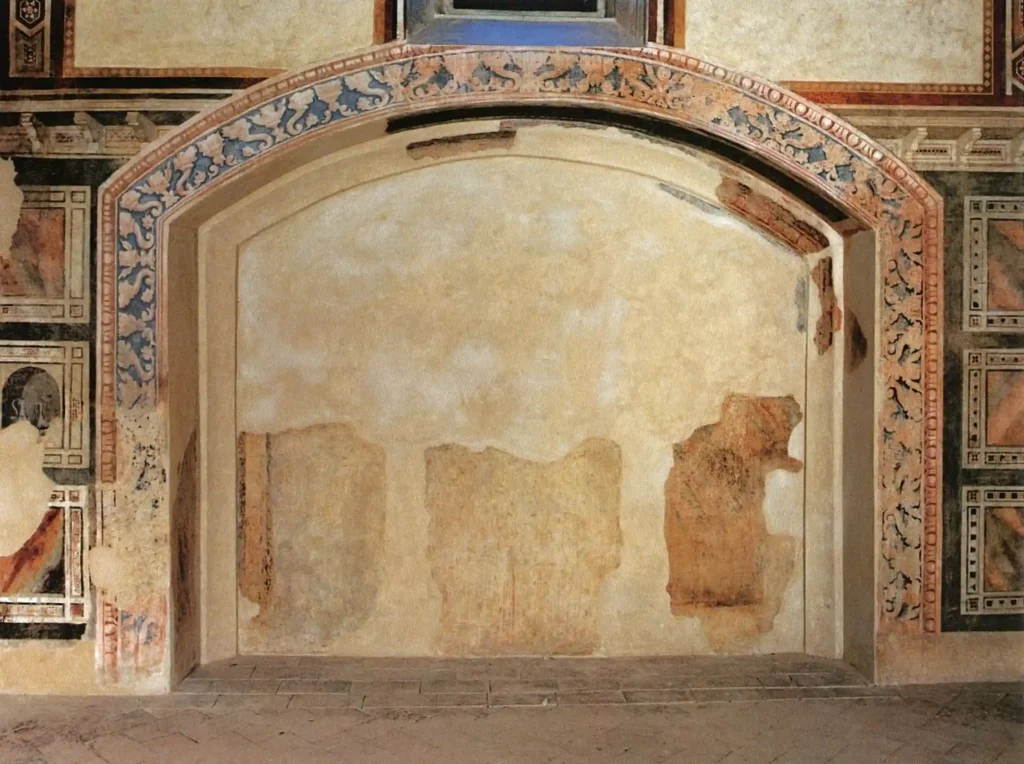
Opposite the entrance, the east wall tells a different story, marked by the traumas of the Second World War. The impact of a German cannonade destroyed the original frescoes in this section. A large central single-lancet window illuminates the room and overlooks a niche housing a polyptych of the Virgin with saints (originally five, now reduced to three due to war damage).
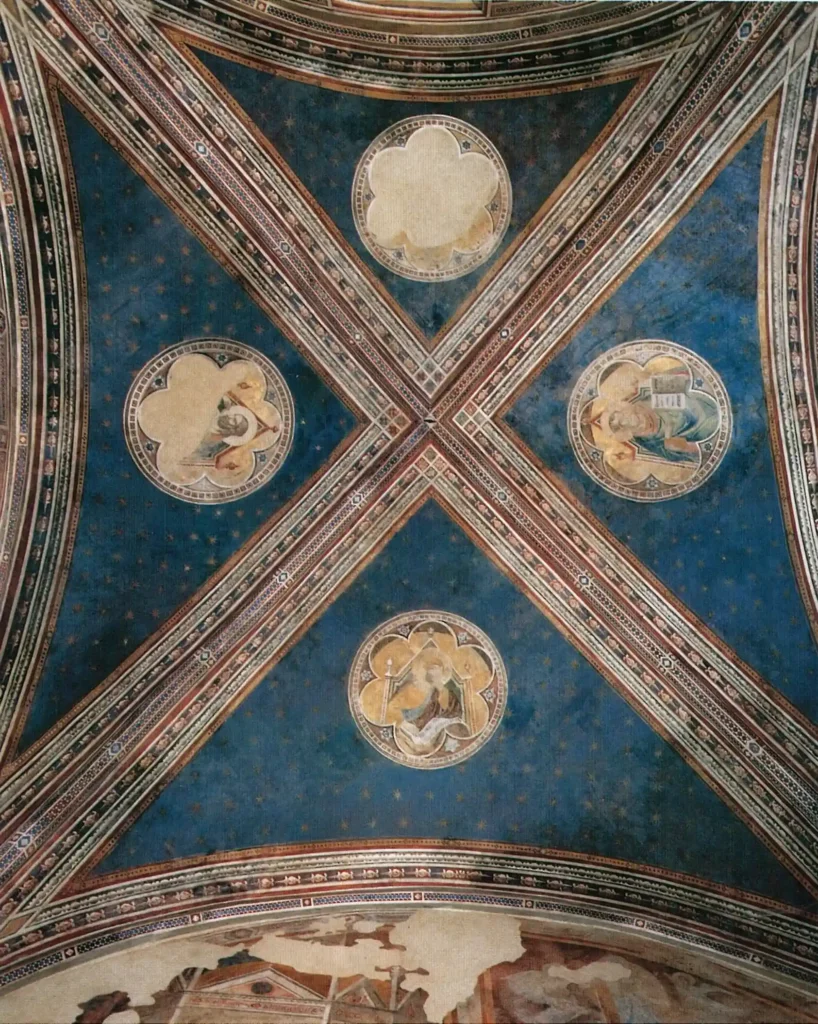
Alzando lo sguardo o osservando i dettagli ad altezza d’uomo, si notano interventi di epoche diverse:
La Volta (Trecento):
Il soffitto è decorato con il classico cielo stellato, al cui centro spiccano 4 tondi raffiguranti gli Evangelisti.
I Santi a Mezzo Busto (Quattrocento)
Nella fascia inferiore, sotto le lunette, troviamo un registro decorativo successivo (XV secolo), non attribuibile al Gaddi. Sono visibili solo 4 santi dei molti previsti, due vescovi e un monaco, identificato probabilmente come San Torello da Poppi, patrono del paese.
/Discover the castle rooms/
Inside Poppi Castle, the Chapel represents one of the most intimate and evocative spaces in the complex. Designed as a place of meditation and spirituality, it embodies the castle’s history not only as a religious space, but as a space deeply connected to the daily lives of its inhabitants.
/Scopri le sale del castello/
All’interno del Castello di Poppi, la Cappella rappresenta uno degli spazi più intimi e suggestivi del complesso. Pensata come luogo di raccoglimento e spiritualità, accompagna la storia del castello non solo come ambiente religioso, ma come spazio profondamente legato alla vita quotidiana di chi lo abitava.